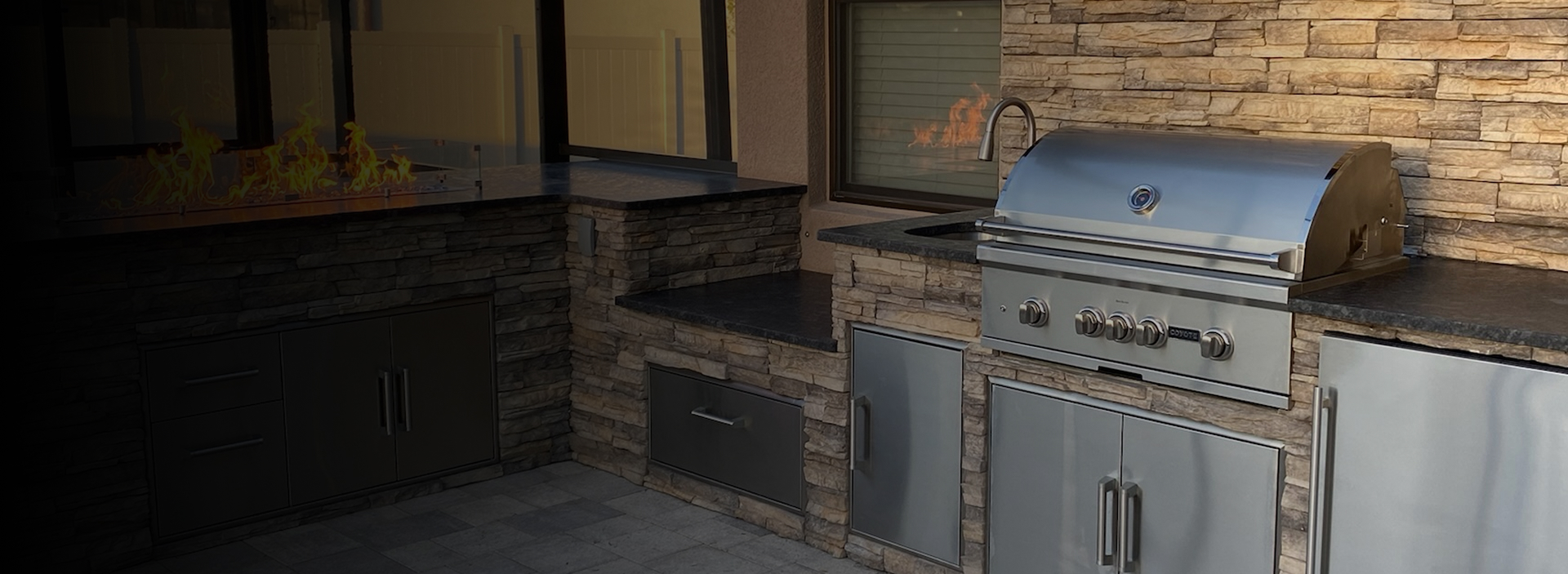
Salt begins corroding an outdoor kitchen long before anyone notices a stain. Rainwater can damage a cabinet from the inside while the countertop still looks new. Florida’s coastal conditions go well beyond direct sun exposure. Salt air, humidity, wind-driven rain, irrigation overspray, and repeated wet-dry cycles each attack different parts of the build in different ways, often at the same time.
That’s why we start by looking at the whole setting, not just the grill or cabinet finish. Our in-house 3D design process lets homeowners see how an outdoor kitchen will relate to the patio, roofline, drainage routes, utilities, shade, and entertaining areas before construction begins.
Why Florida’s Coastal Conditions Change Outdoor Kitchen Design
Outdoor exposure isn’t uniform from one property to the next. A kitchen near the ocean or a saltwater pool collects more airborne salt, while an uncovered kitchen on the windward side of a home receives far more wind-driven rain than one sheltered by a roof or screen enclosure.
Humidity creates a separate problem. Moist air condenses on cool metal surfaces and inside enclosed cabinet cavities, particularly around plumbing, refrigeration components, and shaded areas that don’t dry quickly. Moisture trapped in those spaces contributes to corrosion, mildew, swelling, and premature wear on finishes and hardware.
Sun and heat matter too, especially for cabinet color, countertop movement, appliance performance, and comfort at the cooking area. A durable design accounts for where rain falls, where water runs after a storm, how irrigation reaches the patio, and which surfaces take the strongest afternoon exposure. Each of those factors can affect material choices, layout, and long-term performance.
Choose Materials That Can Handle Salt Air
Material selection should start with the cabinet structure, not the visible door style. Florida outdoor kitchen materials work best as a coordinated system, with cabinets, fasteners, countertops, appliance surrounds, and support bases all chosen for the level of exposure at that specific property.
Cabinet Boxes & Bases
High-density polyethylene cabinetry holds up well in wet conditions because this polymer doesn’t absorb water like wood-based products. It’s a practical choice where a kitchen faces regular rain, pool splashing, or irrigation. CMU masonry construction (concrete masonry unit block) can also provide a stable base when it’s properly detailed for moisture management and finished with suitable exterior materials.
Wood cabinetry and interior-grade cabinet boxes are more vulnerable outdoors. Even under a covered patio, humidity and occasional wind-driven rain can reach door edges, seams, fasteners, and the back of the cabinet. A roof limits exposure, but it doesn’t turn an outdoor kitchen into an indoor room.
Stainless Steel, Hardware & Appliances
Not all stainless steel offers the same corrosion resistance. Marine-grade stainless is formulated for stronger resistance to chloride exposure, the salt compounds that accelerate pitting and surface corrosion. The grade of stainless steel, along with the quality of hinges, drawer slides, screws, and appliance components, deserves close attention for kitchens near the coast or a saltwater pool.
Stainless surfaces still need care. Rinsing away salt deposits, wiping off standing water, and avoiding harsh cleaners help preserve the appearance and performance of metal components. Corrosion typically starts at seams, fasteners, and areas where moisture stays trapped, not on the most visible front-facing surfaces.
Countertops for Outdoor Exposure
Outdoor-rated countertops must handle moisture, ultraviolet exposure, temperature swings, and the practical demands of food prep. Porcelain and sintered surfaces (manufactured slabs formed under intense heat and pressure) are often chosen for outdoor use because of their low water absorption and durable finish. Natural stone and concrete can also work outdoors, though their maintenance needs and sealing requirements vary by material.
Standard indoor quartz may have limitations in an exposed kitchen; direct UV and heat can affect its resins and appearance over time. Countertop decisions should also include seam placement, support, overhangs, backsplashes, and joints where one material meets another. Those transitions are common entry points for water if they aren’t properly sealed and maintained.
Design for Heavy Rain & Fast Drainage
Heavy rain needs a clear path out of the kitchen area. That means shaping the patio and surrounding hardscape so water flows away from cabinets, appliances, and the home rather than pooling at the base of the island. A raised base can keep cabinet components above occasional standing water, while carefully planned slopes prevent water from resting on broad horizontal ledges. Countertops shouldn’t create low spots near seams, appliance cutouts, or backsplashes. Flashing and sealed joints are equally important where a kitchen meets a wall, roof support, or adjacent structure.
Water inside a cabinet cavity is harder to spot than water on a patio. Openings around plumbing lines, poorly sealed masonry, blocked weep paths, and gaps around appliance cutouts can let moisture collect where it can’t dry easily. Checking existing yard and patio drainage before finalizing the layout prevents a kitchen from landing in the lowest point of the outdoor living area.
Sink connections deserve planning as well. Florida guidance for outdoor kitchens in flood hazard areas requires that drainage for outdoor kitchen and bar sinks be designed to prevent floodwater from infiltrating municipal wastewater systems. Applicable Florida Building Code requirements and local permitting considerations depend on the site, so utility routing should be evaluated as part of the design, not added after the island layout is set.
Protect the Kitchen Without Trapping Moisture
Pergolas and covered patios reduce direct rain and sun, but they don’t eliminate humidity, salt accumulation, or wind-driven rain. A solid roof generally offers more rain protection than an open pergola, whose slats don’t stop most rainfall. Screen enclosures can reduce debris and wind effects, though moisture and salt still enter through the screening and settle on surfaces. Regardless of coverage type, cabinets and appliances need materials suited to the conditions outside, not just what’s overhead.
Cabinet ventilation is a detail that’s easy to overlook. Ventilation openings allow heat and moisture to escape from cabinet areas around grills, refrigeration, and utility connections. Service access matters too. Plumbing, electrical connections, gas components, and appliance panels need to be reachable for inspection or repair without dismantling finished sections of the kitchen.
Plan the Entire Outdoor Living Area Together
A well-positioned outdoor kitchen supports how people move through the space. The grill, sink, refrigerator, prep area, bar seating, and dining zone should work together without blocking pathways from the home, pool, patio, or yard. Patio elevations, pool decks, pergola posts, lighting, audio equipment, utility lines, and drainage patterns can all affect where an island can sit and how large it can be, which is why those decisions belong in the design phase, not after the slab is poured.
We use in-house 3D designs to help homeowners work through these decisions before construction begins. Seeing the proposed kitchen alongside a patio, fire feature, pergola, lighting plan, or existing pool area makes it easier to adjust appliance placement, counter space, weather coverage, and circulation while changes are still straightforward.
A Florida Outdoor Kitchen Planning Checklist
A weather-ready kitchen is built from many small decisions that support one another. Before approving a design, review these details with your builder:
- Cabinet Construction: Are the cabinet boxes made from materials suited to rain, humidity, and the property’s exposure level?
- Metal Components: What stainless steel grade is specified for doors, drawers, hardware, and appliances near salt air or a saltwater pool?
- Countertop Selection: Is the countertop rated for outdoor UV exposure, heat, moisture, and the required span or overhang?
- Seams & Transitions: How will countertop seams, backsplashes, wall connections, and appliance cutouts be sealed?
- Ventilation & Access: Where are ventilation openings located, and can utility connections be reached for future service?
- Base Elevation: Will the cabinet base stay above areas where water can collect after heavy rain?
- Drainage Paths: Where will surface water flow from the countertop, patio, and surrounding landscape?
- Weather Coverage: What protection will a roof, pergola, or enclosure provide, and what exposure will remain?
- Maintenance Needs: How often should salt residue be rinsed away, seals inspected, and drainage paths cleared?
- Warranty Details: Which materials and construction elements are covered, and what care does the manufacturer require?
For homeowners in Melbourne and nearby coastal communities, the right answer depends on the property rather than a single product label. A kitchen that holds up against salt, rain, heat, and humidity is one where the cabinetry, countertop, drainage, ventilation, utilities, and coverage were planned as one system from the start.
Freedom Outdoor Kitchens provides free estimates, flexible financing options through our office, and warranty-backed work for homeowners in Melbourne, Viera West, Merritt Island, and Vero Beach. To discuss an outdoor kitchen designed around your property’s conditions, contact us at (321) 415-4109.